


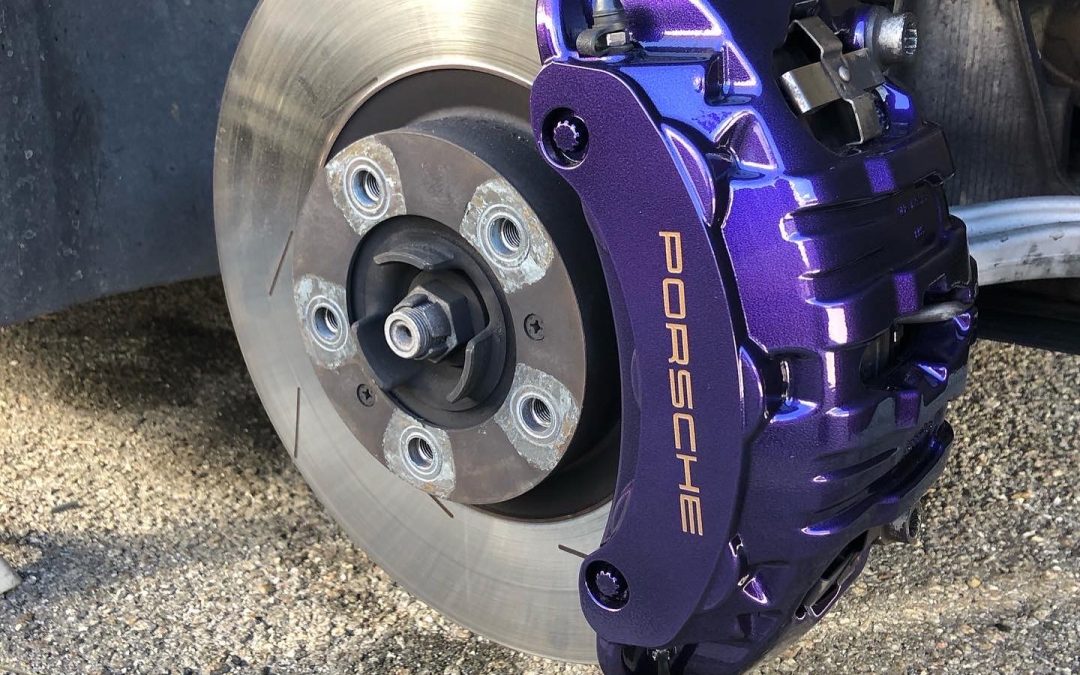
For Porsche owners in San Jose, San Francisco, and the wider Bay Area, brake calipers are one of the most visible opportunities for exterior customization. A fresh finish can add color behind the wheels while preserving the factory Porsche branding that makes the brake package part of the car’s identity.
Porsche brake refinishing is more involved than applying ordinary paint. Brake calipers experience repeated heat cycles, road debris, brake dust, and cleaning chemicals. The coating system, preparation process, decal materials, and curing method all affect the final result.
Here are 10 things to know when comparing Porsche brake caliper powder coating and other refinishing options.
1. Porsche calipers operate in a demanding environment
Brake calipers do not experience the same temperatures as the friction surface of the brake rotor, but they still become hot during normal and spirited driving. Under repeated hard braking, caliper temperatures can exceed 400°F, especially during canyon drives, autocross, or track use.
That heat is combined with:
- Brake dust and iron particles
- Road salt, moisture, and grime
- Wheel cleaners and other chemicals
- Small impacts from sand and road debris
- Frequent heating and cooling cycles
A refinished caliper therefore needs more than an attractive color. It needs a coating system selected for heat resistance, adhesion, and long-term durability.
2. Powder coating generally outlasts conventional paint
Traditional air-dried paint can provide a quick visual improvement, but it is more vulnerable to chipping, fading, blistering, and peeling when exposed to repeated heat cycles. The risk becomes more noticeable when caliper temperatures move beyond 400°F.
Porsche brake caliper powder coating uses an electrostatically applied powder that is cured in an oven, typically at approximately 400°F. During curing, the powder flows and bonds to the prepared metal surface, creating a uniform finish with strong resistance to abrasion and chemicals.
The result is typically thicker and more durable than conventional paint. However, not every powder is suitable for brake components. The base powder and clear coat must be compatible with the expected heat range and the caliper material.
A professional refinishing provider should also explain the coating system being used rather than simply describing it as “high temperature.” California Calipers provides additional background on the process in its guide to what powder coating is.

3. The caliper must be properly prepared before coating
A durable finish begins before the first color is applied. The caliper is normally removed, disassembled as appropriate, and cleaned to eliminate brake dust, grease, corrosion, and the previous finish.
The surface can then be media blasted or otherwise prepared to create a clean, consistent foundation. Openings, piston bores, threaded areas, bleeder ports, and mounting surfaces must be carefully masked or protected.
This step matters for both appearance and fitment. Coating material should not interfere with piston movement, brake hose connections, hardware, or the surfaces where components mount. Proper preparation helps the finish bond evenly and keeps critical areas clear.
4. The service is for Porsche-branded calipers
For owners looking for Porsche custom calipers, the goal is usually to enhance the original branded component rather than replace its identity. California Calipers focuses on Porsche-branded calipers with visible PORSCHE lettering.
That lettering can be retained and highlighted in a contrasting color. For example, a gloss red caliper with black lettering creates a different effect from a purple caliper with gold or silver lettering. The choice depends on the vehicle’s paint, wheel finish, interior accents, and the overall style of the build.
The finish is intended to look integrated with the Porsche rather than like an unrelated aftermarket accessory.
5. Multiple colors are available
Porsche calipers do not have to remain red, black, or the original factory color. Custom color options can include:
- Yellow
- Orange
- Blue
- Purple
- Red
- Green
A high-gloss finish can make the color stand out through open-spoke wheels, while a satin or darker finish can create a more understated appearance. Owners can review available options through the California Calipers colors page.
Color selection should account for the entire car. Yellow or orange can complement a black, white, or gray Porsche. Blue can coordinate with a cool exterior color or provide contrast against silver wheels. Purple and green offer a more distinctive appearance for an owner seeking a less common combination.
6. Custom color matching works across Porsche models
A Porsche 911, Taycan, Macan, and Panamera each offer different shapes, wheel designs, and styling cues, but all can benefit from a coordinated caliper finish.
Custom color matching allows the calipers to be selected around:
- The vehicle’s exterior paint
- Factory accent colors
- Custom wheels
- Interior stitching or trim
- Motorsport-inspired design themes
For a 911, a bold caliper color can emphasize the car’s low, athletic profile. On a Taycan, a carefully matched finish can complement the vehicle’s modern electric performance styling. A Macan or Panamera may benefit from a color that adds a sportier detail without changing the vehicle’s practical character.
This is also useful for owners with a specific paint code, color sample, or design reference. A color discussion before the work begins helps set realistic expectations for gloss, metallic effect, and final appearance.
7. High-temperature decals add the Porsche detail
The PORSCHE logo is often the visual feature that makes a finished caliper look complete. Cosmetic decals should not be treated like ordinary automotive stickers because the caliper surface is exposed to heat.
California Calipers applies high-temperature decals and then applies a powder-coat clear over both the caliper and decal. This helps protect the lettering from fading, peeling, brake dust, and routine wheel cleaning.
The process generally follows this order:
- The caliper is prepared and coated in the selected base color.
- The high-temperature Porsche decal is positioned carefully.
- A compatible powder-clear coat is applied over the caliper and decal.
- The clear coat is cured to create a sealed, finished surface.
The clear layer helps integrate the decal into the finish instead of leaving it exposed on top of the coating. The result is a cleaner appearance and better protection during everyday driving.

8. A core exchange can reduce turnaround time
Sending in the calipers from a daily-driven Porsche can create downtime. The vehicle may remain disassembled while the original components are being refinished.
A core exchange program provides another option. Instead of waiting for the customer’s calipers to be processed, a matching set already in stock can be prepared and shipped or arranged for installation, depending on the project. A core charge applies, and that charge is refunded when the customer’s original calipers are returned as required.
This approach can be helpful for Bay Area Porsche owners who need a faster turnaround or want to avoid leaving their car parked for an extended period. Compatibility still needs to be confirmed by model, year, brake package, and caliper configuration.
9. The intended use should be discussed before choosing a finish
A Porsche used primarily for commuting, weekend drives, and Cars & Coffee events has different requirements from one that attends frequent track days.
For street-driven vehicles, a professionally applied high-temperature powder system can provide a durable and attractive finish while resisting the wear caused by road use. For frequent track driving, the shop should know how the car is used so the coating system and service expectations can be discussed appropriately.
Brake temperatures, seals, fluid, pads, rotors, and maintenance intervals all matter on a track vehicle. Refinishing changes the appearance of the caliper, but it does not replace inspection or mechanical service. Any caliper with damaged seals, corrosion, or other mechanical concerns should be evaluated before refinishing.
10. Local service starts with confirming the details
Before requesting Porsche brake refinishing in San Jose, it helps to provide:
- Porsche model and year
- Front and rear brake configuration
- Current caliper color and condition
- Desired base color and finish
- Preferred PORSCHE logo color
- Whether the car is street-driven or track-used
- Whether a core exchange is preferred
- Any photos, color references, or wheel images
This information helps determine whether the existing calipers can be used, whether a stock core set is available, and how the finished color will appear behind the wheels.
California Calipers has experience with custom powder-coated brake components and can discuss options for Porsche owners throughout San Jose and the Bay Area. The photo gallery provides examples of finished calipers, while the local service page and contact page provide starting points for a project consultation.
Whether the project involves Porsche 911 powder coated calipers, Porsche Taycan brake customization, or a color-matched finish for a Macan or Panamera, the most important factors are preparation, heat-appropriate materials, protected decals, and a clear plan for returning the vehicle to the road.
About California Calipers / Contact Us
California Calipers refinishes Porsche-branded brake calipers in custom colors, including yellow, orange, blue, purple, red, and green. With more than 15 years of powder coating experience, the service is designed for owners who want a unique look with a durable, professionally applied finish.
California Calipers
831-435-9558
californiacalipers@nullgmail.com
https://www.californiacalipers.com/
Recent Comments