


Owning a Dodge Challenger is about more than just getting from point A to point B; it’s about the rumble of the Hemi, the aggressive stance, and that unmistakable presence on the road. Whether you’re rocking a SXT or a widebody Hellcat, there is a certain level of pride that comes with the Mopar badge. However, while we all spend hours debating which intake adds the most horsepower or which exhaust has the best growl, one of the most critical systems on the car often gets neglected: the brakes.
Stopping 4,000+ pounds of American muscle isn’t easy. Yet, Challenger owners frequently fall into common traps that compromise both performance and aesthetics. From ignoring the "Brembo squeal" to the ultimate sin of the "rattle-can special," here are the seven biggest mistakes you might be making with your Challenger’s brakes.
1. Neglecting the "Invisible" Enemy: Brake Dust
If you have a performance trim with Brembo calipers, you know the struggle. You wash your car, drive around the block, and suddenly your wheels are coated in a fine, dark grey soot. Most owners treat this as a cosmetic nuisance, but it’s actually a silent killer for your Challenger's finish.
Brake dust is a mixture of carbon fibers, metal shavings, and adhesive residues. When these particles get hot, which they do every time you hit the pedal, they can actually "pit" the surface of your wheels and your brake calipers. If left to sit, moisture turns this dust into a corrosive paste that eats through clear coats. Neglecting regular cleaning isn't just about being messy; it's about letting your expensive hardware rot from the outside in.
2. Choosing "Budget" Brake Pads for a Performance Car
It’s tempting to head down to the local big-box auto parts store and grab the $40 "Gold" or "Silver" pads because they’re in stock. But putting cheap pads on a Challenger is like putting budget sneakers on an Olympic sprinter.
Cheap pads often lack the heat dissipation required for a heavy car. You’ll experience "brake fade" much faster during spirited drives, and the noise, oh, the noise, will be unbearable. High-performance Mopars require pads with specific friction coefficients to maintain that bite. If you’re looking to reduce dust, there are great ceramic options available, but always ensure they are rated for the weight and speed of your specific model.

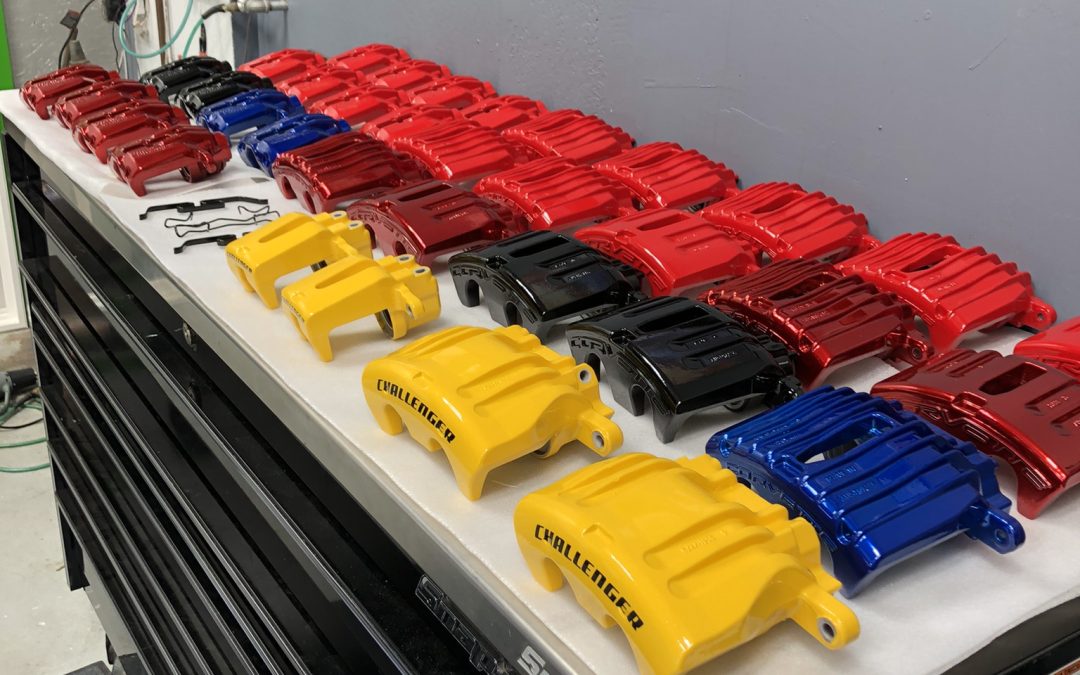
A real shop display like this makes the difference easy to see. These are actual California Calipers results, showing a range of powder coated colors and custom Challenger decals that give owners more ways to match the look of the car while keeping a durable finish behind the wheels.
3. Forgetting the Fluid Flush
Brake fluid is the lifeblood of your stopping power, yet it is one of the most overlooked maintenance items. Brake fluid is hygroscopic, meaning it literally sucks moisture out of the air. Over time, that moisture lowers the boiling point of the fluid.
If you’re pushing your Challenger through some canyon roads and your fluid is old, that moisture can turn to steam. Since steam is compressible and liquid isn't, your brake pedal will go soft, and your stopping distance will skyrocket. Most experts recommend a flush every two years, regardless of mileage. If your fluid looks like dark tea instead of light honey, you’re already behind the curve.
4. Reusing Old Rotors Without Inspection
We get it, rotors are heavy and expensive to ship. However, slapping new pads onto old, grooved, or warped rotors is a recipe for disaster. A "pulsing" feeling in the steering wheel when you brake is a dead giveaway that your rotors are uneven.
When you install new pads on an uneven surface, they won't bed in properly, leading to reduced contact area and poor performance. At the very least, rotors should be measured with a micrometer to ensure they are above the minimum thickness before you decide to "turn" them or reuse them. Often, with the weight of the Challenger, it’s safer and more effective to simply replace them.
5. Overlooking Hardware and Lubrication
Brakes aren't just pads and rotors; they are a system of moving parts. Many DIYers forget to clean and lubricate the slide pins, clips, and abutment plates. On the Challenger’s Brembo setups, the pins that hold the pads in place can become seized due to heat and road salt.
If your calipers can't move freely, your pads will wear unevenly. This leads to one side of the pad being paper-thin while the other looks brand new. Every time you do a brake job, you should be using high-temp silicone grease on the appropriate contact points.
6. Ignoring Early Warning Signs (The Squeal and the Pull)
Your Challenger is trying to talk to you. If it squeals, it’s usually the wear indicator telling you the pads are low. If the car "pulls" to one side when you brake, you likely have a seized caliper piston.
Ignoring these signs doesn't just make your car sound like a literal garbage truck; it puts unnecessary stress on your suspension and tires. A sticking caliper can generate enough heat to warp a rotor in a single drive or even cause a wheel bearing to fail. If something feels off, it usually is.
7. The Biggest Mistake: The "Rattle-Can" DIY Caliper Paint
This is the mistake that breaks our hearts the most. You want that pop of color behind your wheels, maybe a classic TorRed or a vibrant Sublime green, so you head to the store, grab a $15 can of "high-temp" caliper paint, and spend a Saturday masking off your rotors with blue tape.
Here is why caliper paint is a massive mistake for a Challenger owner:
The Heat Reality
Your brakes can reach temperatures exceeding 500°F during hard braking. Most consumer-grade "caliper paints" are essentially just standard spray paint with a slightly higher heat threshold. They aren't designed to handle the thermal expansion and contraction of heavy-duty calipers. Within a few months, the paint will begin to flake, bubble, and peel, leaving your car looking like it has a skin condition.
The Chemical War
Brake fluid is one of the most effective paint strippers on the planet. If even a drop of fluid touches your painted calipers during a bleed or a pad change, the paint will wrinkle and lift immediately. Professional powder coating, on the other hand, is chemically bonded to the metal and is significantly more resistant to chemicals.
The "Orange Peel" Aesthetics
Let’s be honest: a brush-on or spray-on kit never looks factory. It looks like… well, paint. It lacks the deep, glass-like luster of a professional finish. Your Challenger deserves better than a textured, uneven finish that traps more brake dust and makes the car look cheap.
The Professional Alternative: Why Powder Coating Wins
If you want the "wow" factor without the "why did I do that?" regret, powder coating is the only real answer. At California Calipers, we’ve spent over 15 years perfecting the art of the automotive finish.
Unlike paint, powder coating involves electrostatically charging a dry powder and spraying it onto the sandblasted, bare-metal caliper. The part is then baked in an oven at high temperatures, causing the powder to melt and flow into a continuous, ultra-durable film.
Why Choose California Calipers?
- Factory Color Matching: We specialize in Mopar favorites. Whether you want to match your body color (TorRed, B5 Blue, Plum Crazy) or go for a high-contrast look, we have the colors to make it happen.
- Durability: Our finishes are designed to withstand the heat of the track and the road grime of the daily commute.
- Core Exchange Program: We know you don't want your car sitting on jack stands for two weeks. Our Core Exchange program allows us to send you a finished set of calipers first. You swap them out and send your old ones back to us. It’s the fastest way to get a custom look with zero downtime.
- Attention to Detail: We don't just "paint over" things. We strip the calipers to bare metal, mask off all critical tolerance areas, and rebuild them with new seals and boots if necessary.
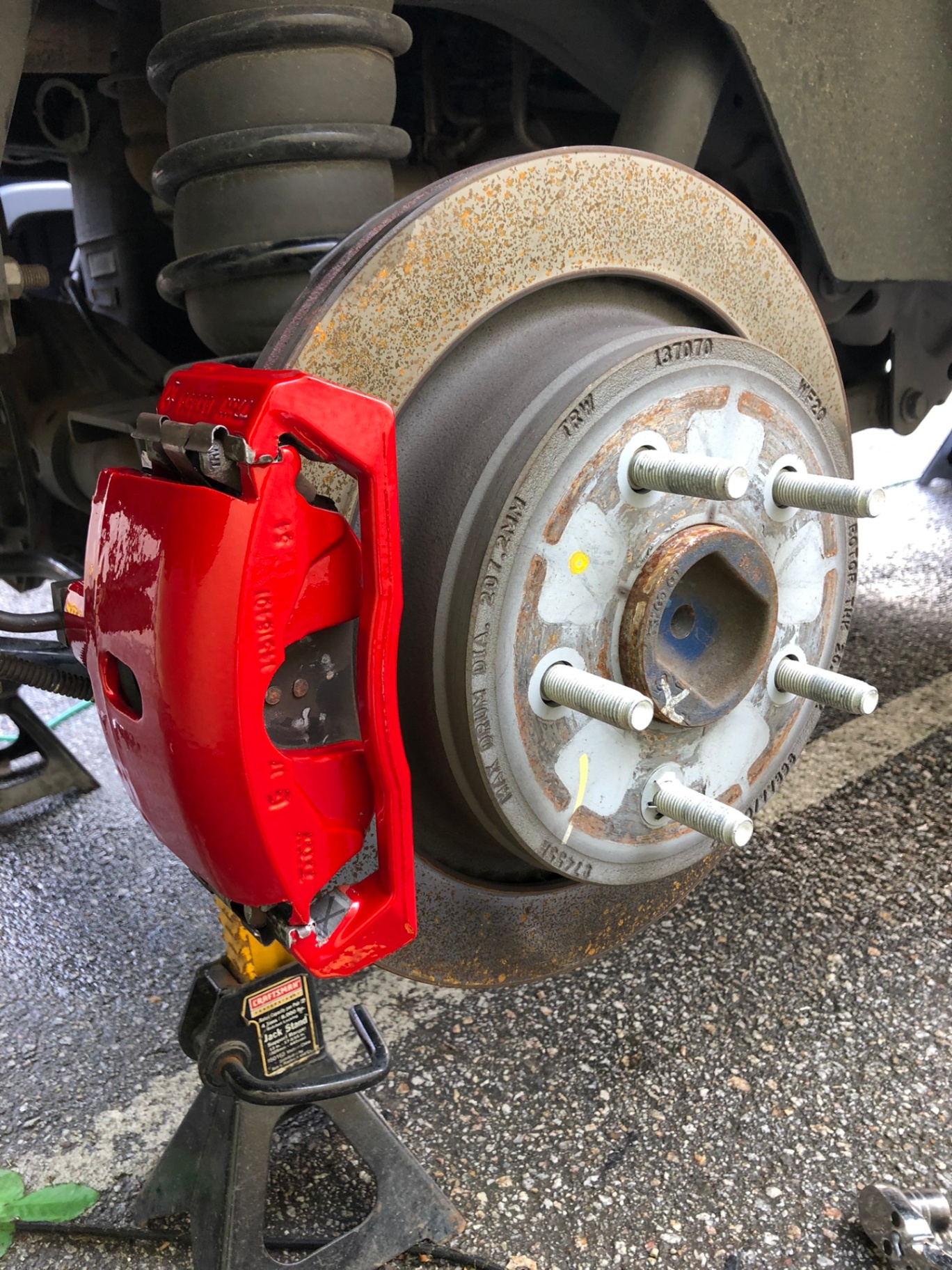
This installed red caliper is another real example from the shop. It shows the finished result on the vehicle, where the color, gloss, and overall presentation matter most once the wheels are back on and the car is out on the road.
Final Thoughts
Your Dodge Challenger is an icon of American engineering. Don't let common brake mistakes or a cheap DIY paint job undermine its performance or its value. Whether you’re looking for a simple maintenance refresh or a full-blown aesthetic overhaul with custom blue Brembos, doing it right the first time saves you money, time, and embarrassment at the next car meet.
Ready to give your Challenger the stopping power and style it deserves? Check out our photo gallery for inspiration and see what 15 years of experience looks like.
About California Calipers / Contact Us
California Calipers
831-435-9558
californiacalipers@nullgmail.com
https://www.californiacalipers.com/
Recent Comments